A fuller-looking neck can come from a pinchable fat pad, loose skin, a recessed chin, platysma bands or several of these together. By the end, you will know which finding matters in your profile, what an injection appointment involves, which warning signs require medical attention and when another option fits better.
Key takeaways
- Separate fat, loose skin, muscle, and jaw structure before choosing treatment.
- A clinician assesses tissue movement, skin elasticity, profile, and medical history.
- Deoxycholic acid injections cause temporary swelling during the first week.
- Urgent symptoms include breathing or swallowing difficulty and rapidly worsening swelling.
What is actually creating the fuller neck profile?
A fuller neck profile usually reflects one cause or a combination of causes. The main double chin causes are easier to separate by looking at the tissue, its movement and your side profile:
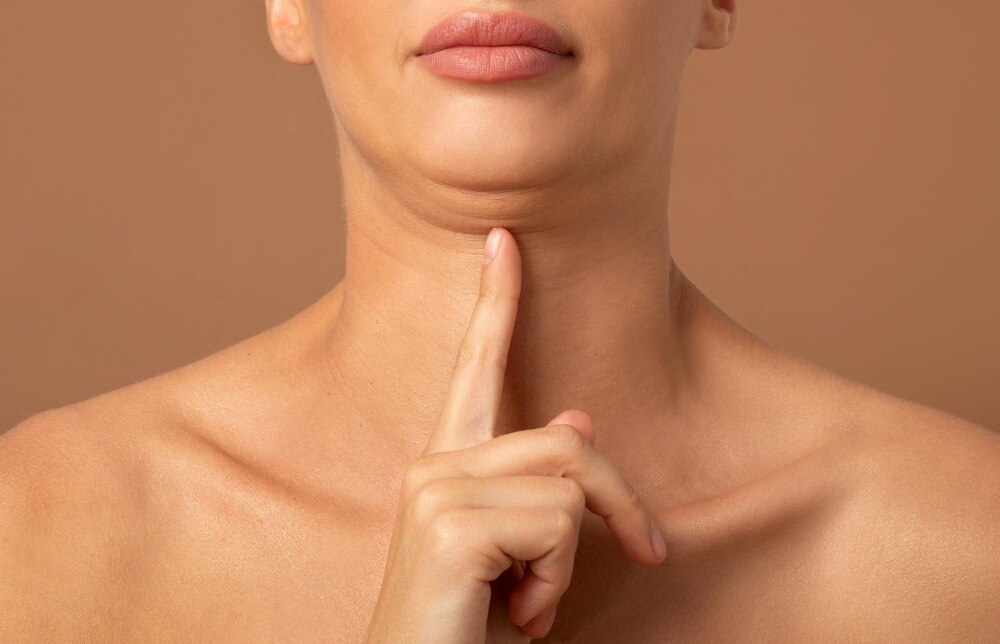
- Submental fat feels like a soft, pinchable pad beneath the chin. It stays present when you relax the neck and creates fullness without necessarily producing folds or hanging skin.
- Loose neck skin looks thin, crepey or folded and hangs below the jaw. Gently stretching it may show poor recoil; removing fat alone can leave the neck looking looser.
- A recessed chin sits farther back than expected in side view. You may have little submental fat but still lack a clear chin-to-neck angle because the chin provides less forward projection.
- Platysma bands appear as vertical cords when you clench your jaw, speak or pull the corners of your mouth downward. They may disappear when the neck relaxes, unlike a fixed fat pad.
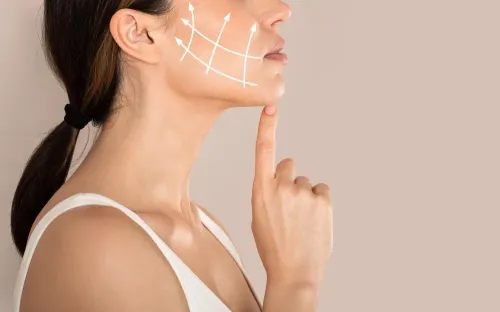
Look for overlap: fat can stretch skin, loose skin can conceal a modest fat pocket, and a recessed chin can make a normal amount of fat look excessive. A clinician should assess you sitting, with your neck relaxed and moving, then check skin recoil, pinchable fat, chin projection, jawline symmetry and platysma activity.
A posed photograph cannot reliably distinguish these causes.
How does a clinician decide whether you are suitable for treatment?
Suitability requires an in-person double chin assessment, not a decision from a posed photograph. The clinician should examine your neck while you are sitting, turning your head and speaking, because movement reveals muscle activity, asymmetry and how the skin hangs.
The examination should cover:
- The amount and location of pinchable submental fat, including whether the pocket is broad, central or uneven.
- Skin recoil: gently pinched skin that snaps back differs from loose skin that remains folded.
- Platysma activity, visible bands, scars and side-to-side differences.
- Chin projection and jawline anatomy, since a recessed chin can make a small fat pocket look larger.
- Weight stability, because contouring is not weight loss and major later weight changes can alter the result.
- Medical history, previous neck or facial procedures, allergies, bleeding disorders, infection and medicines such as anticoagulants.
| Finding | What it suggests | How it affects the decision |
|---|---|---|
| Localized pinchable fat with good recoil | Fat is the main issue | Fat reduction may suit the contour goal |
| Loose skin with little fat | Skin laxity is dominant | Fat treatment alone may leave sagging |
| Low chin projection | Structural imbalance | Chin enhancement may create more profile change than removing a small fat pocket |
| Active bands or marked asymmetry | Muscle or anatomical contribution | A different or combined plan needs discussion |
A photograph cannot show these findings reliably. If the examination identifies an unsuitable cause, unstable weight or a medical risk, the clinician should change, delay or avoid treatment.
What happens during deoxycholic acid injection treatment?
The clinician confirms that the fullness is suitable for injection lipolysis rather than loose skin or a recessed chin, then photographs and examines the neck at rest and in motion. Weight stability, medical history, medicines, previous procedures, pregnancy or breastfeeding, and bleeding or swallowing problems affect the plan.
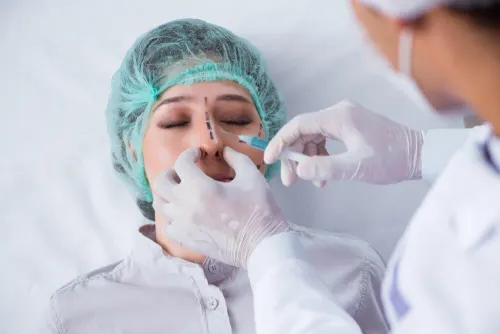
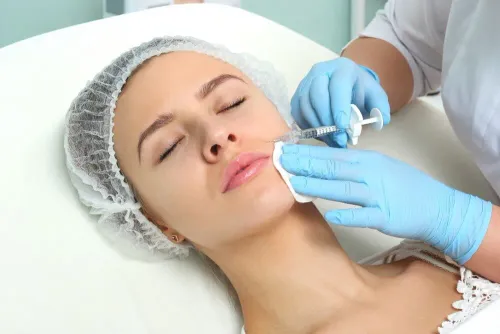
1. The treatment area is cleaned, measured and marked as a grid. The clinician maps the pinchable submental fat, keeps a safety margin from the jawline and nerves, and chooses the number and depth of subcutaneous injection points.
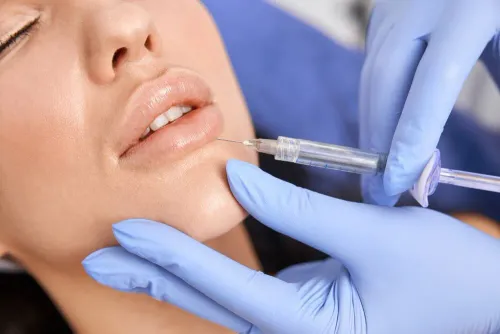
2. Deoxycholic acid is injected into the fat through the marked grid. In the United States, Kybella is FDA-approved for adults with moderate-to-severe submental fat. Its labelled technique uses 0.2 mL at each point, spaced 1 cm apart, with no more than 50 points or 10 mL per session.
3. The clinician explains that one session may not provide the desired contour. Sessions must be separated by at least one month; up to six were studied, while the actual number depends on fat volume, symmetry and response. The appointment length varies with the treatment area and number of injections.
4. Before any submental fat injections, inspect the carton and vial with the clinician. Confirm the product name, active ingredient, batch or lot number, expiry date, intact seal and local approval status; do not proceed with an unlabelled or expired product.
Swelling can temporarily obscure the contour, so results are assessed after healing rather than immediately. Non-surgical fat reduction contours the neck; it does not produce weight loss.
What should you expect during the first week, and which symptoms are urgent?
Expect swelling after Kybella to be most noticeable during the first two or three days, then gradually improve over one to two weeks. Bruising, tenderness, redness, firmness and numbness are common parts of injection lipolysis recovery; firmness or altered sensation can last several weeks.
| Time | What you may notice | What to do |
|---|---|---|
| Days 1–3 | Pronounced swelling, soreness, bruising, tightness or numbness | Follow the clinician’s aftercare instructions and avoid pressing or massaging the area unless told to do so |
| Days 4–7 | Swelling should begin settling, while firmness, tingling or bruising can remain | Contact the clinic if pain or swelling is intensifying rather than easing |
| After week 1 | Residual lumps, firmness or numbness can persist while the area settles | Arrange review if the reaction is not gradually improving |
Contact the treating clinician urgently for an asymmetric smile, facial weakness or difficulty swallowing. These symptoms can indicate temporary marginal mandibular nerve paresis, one of the important submental injection risks.
Also report rapidly spreading redness, increasing warmth, pus, skin blistering, darkening or ulceration, severe pain, fever, or swelling that continues to worsen. These signs can point to infection or tissue injury from injection into the wrong plane.
Treat breathing difficulty, throat swelling, faintness or widespread hives as an emergency: seek immediate medical help rather than waiting for the clinic to reply. Do not judge the final contour during the first week; early swelling can make the chin and neck look fuller or uneven.
Which option matches your anatomy and profile goal?
The best choice depends on whether your profile is shaped by fat, loose skin, weak chin projection, or several causes together. Compare these double-chin treatment options against the actual anatomy, not the amount visible in a photograph.
| Option | Best fit | Main limitation |
|---|---|---|
| Injections | Small-to-moderate, pinchable fat with reasonable skin recoil | Swelling is substantial; repeated sessions may be needed, and it will not project a recessed chin |
| Submental liposuction | A clearly localised fat pocket when you want one, more predictable reduction | Does not correct major loose skin, platysma bands, or a small chin; bruising and contour irregularity are possible |
| Cryolipolysis | A pinchable fat pocket when you prefer cooling without injections or an incision | Improvement develops over weeks to months, often after more than one treatment; it does not tighten loose skin |
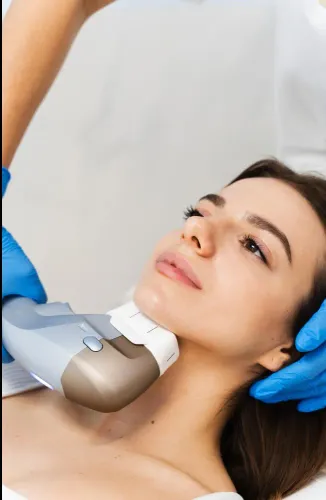
| Radiofrequency skin tightening | Mild laxity after fat is limited or already reduced | Tightening is modest and variable; it cannot remove substantial fat or excise excess skin |
| Thread lifting | Selected mild laxity when a temporary lift is the priority | It neither removes fat nor strengthens a recessed chin, and results can be uneven |
| Chin enhancement | A low or recessed chin making the neck look fuller | Filler or an implant changes projection; it does not remove submental fat |
| No treatment | Mild fullness, stable appearance, or a risk-benefit balance that does not justify intervention | The profile remains unchanged |
At The Celebface Clinic, ask the clinician to compare chin projection, skin recoil, fat volume and platysma movement while you sit and move. Treating the wrong structure can leave you with less fat but little improvement in profile definition.
Related services
A fat-dissolving injectable that melts localized fat deposits under the chin, arms, abdomen, or thighs. View service → |
A minimally invasive lifting procedure using absorbable threads that lift and tighten sagging skin on the face and neck. View service → |
Frequently asked questions
What causes a fuller neck profile?
A fuller neck profile can result from submental fat, loose skin, muscle structure, jaw projection, or a combination of these factors.
How does a clinician decide if you are suitable for treatment?
The clinician examines the tissue, its movement, skin elasticity, side profile, medical history, and the result you want.
What happens after deoxycholic acid injections?
The treated area can swell, feel tender, bruise, or become numb during the first week. Your clinician will explain expected symptoms and warning signs.
Which double chin reduction option is right for you?
The appropriate option depends on whether fat, loose skin, muscle, or jaw structure creates the profile, along with your desired degree of definition.