Thin lips, an uneven vermilion border, a blurred Cupid’s bow or downturned corners do not all need the same injection plan. You will be able to match a lip concern to the right type of correction, check whether a practitioner and product are safe, and judge recovery, longevity and alternatives before consenting.
Key takeaways
- Name one primary goal: shape, definition, volume or balance.
- Ask which HA filler, injection technique and amount the clinician recommends.
- Plan for swelling and wait for settling before judging the result.
- Know the urgent warning signs that require immediate medical attention.
Choose the Lip Change You Actually Want
A lip-filler plan works best when it names one primary change: better lip shape, sharper lip definition, more lip volume, or improved balance between the two sides. Hyaluronic-acid (HA) filler can refine the vermilion border, clarify an indistinct Cupid’s bow, add forward projection, support downturned corners, soften vertical lip lines and reduce visible asymmetry.
| Goal | What filler targets | Why it matters |
|---|---|---|
| Shape or definition | Vermilion border, Cupid’s bow, corners and selected asymmetry | Improves outline and balance without substantially enlarging the lips |
| Projection | The central lip body or specific areas needing forward support | Adds visible pout while preserving proportion |
| Overall volume | The upper lip, lower lip or both | Increases fullness when thinness is the main concern |
Definition work is not the same as filling the entire lip. If you add gel everywhere to solve a faint border, the outline can blur, the lips can feel heavy and movement during speech or smiling can look unnatural. A clinician may instead use small, targeted placements.
A reference photograph shows a direction, not a guaranteed result. Lip length, muscle activity, dental support, existing asymmetry and natural facial proportions differ, so another person’s shape cannot be copied exactly. The realistic aim is improvement that fits your anatomy, not a borrowed template.
How a Clinician Plans and Delivers Lip Filler
A well-planned hyaluronic-acid lip filler treatment starts with facial-proportion assessment, not a syringe. The clinician examines lip length, projection, symmetry, the natural vermilion border and Cupid’s bow, then reviews previous filler, including its location, product and any complications.
The planned lip filler injection areas depend on the goal:
- Vermilion border for definition
- Cupid’s bow for shape
- Lip body for controlled volume
- Central lip for projection
- Corners for support when they turn downward
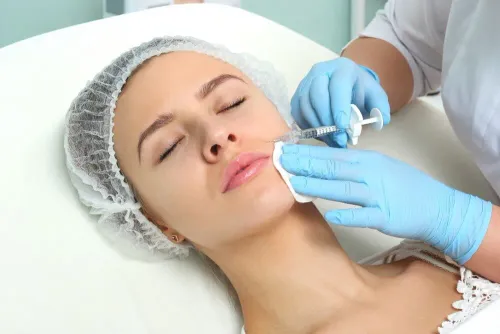
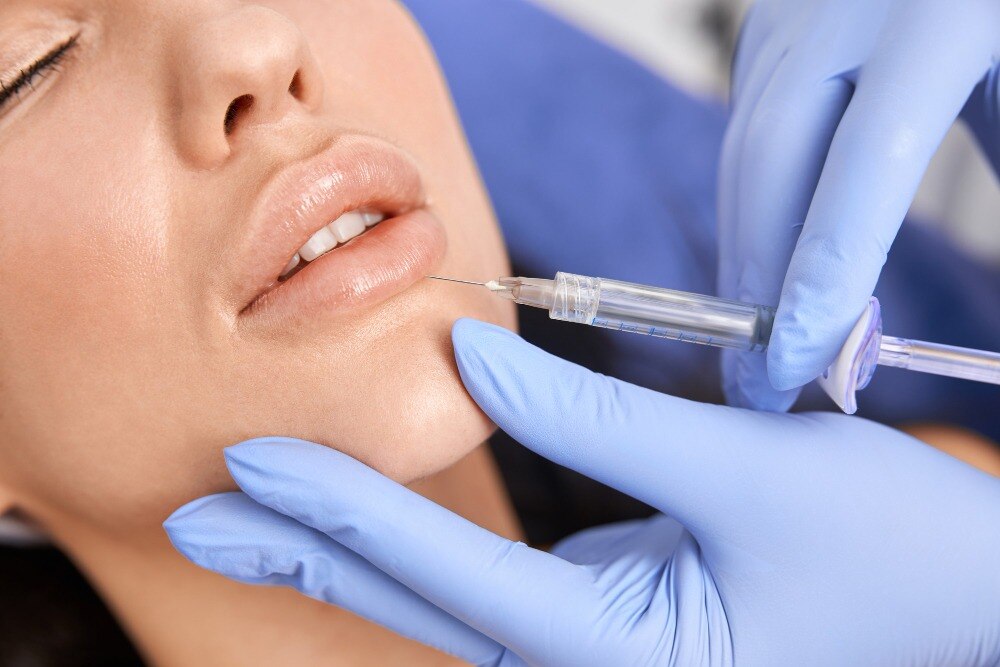
Needle versus cannula is chosen according to anatomy and the intended pass. A fine needle offers precise placement in small areas; a cannula may suit certain broader or deeper passes. Neither is automatically safer: vascular anatomy, depth, direction and injection technique determine risk.
The clinician uses conservative dosing and checks how the lips look at rest, during speech and while smiling. Preserving movement matters as much as increasing fullness. One area may be treated first, followed by a pause while swelling settles; reassessment then shows whether more filler is needed.
Staged correction reduces the risk of mistaking temporary swelling for inadequate volume. A later refinement can address residual asymmetry or definition without making the whole lip heavy, blurring the border or restricting natural movement.
| Needle or cannula | Typical role | Key consideration |
|---|---|---|
| Fine needle | Precise placement in small areas | Useful for controlled border or Cupid’s bow work |
| Cannula | Broader or deeper passes | Requires anatomy-led depth and direction planning |
What to Check Before You Consent
Before consenting, use the lip filler consultation to make avoidable risks visible. Tell the clinician about your cold sore history before lip injections, active skin or oral infection, allergies, bleeding disorders, autoimmune conditions, diabetes control, previous filler, and medicines or supplements that affect bleeding.
Recurrent herpes simplex can justify discussing preventive antiviral treatment; an active infection at the treatment site requires postponement. Limited safety data make pregnancy or breastfeeding a reason for careful medical discussion, not routine treatment.
Ask to see and record:
- The filler brand and batch number, exact product name, hyaluronic-acid concentration, intended indication, expiry date, sealed packaging and traceability record.
- Whether the product is hyaluronic acid, and whether its regulatory clearance or approval covers your age, the lip area and your treatment goal. Do not assume approval for one facial area applies to another.
| Check | Ask directly | Why it matters |
|---|---|---|
| Injector | “What licence do you hold, and what anatomy and filler-injection training have you completed?” | Facial blood vessels vary in position and depth. |
| Emergency plan | “How would you recognise and manage a vascular occlusion, and where would I receive urgent care?” | Delay can threaten skin or vision. |
| Device | “Will you reject a needle-free pressure pen?” | Pressure devices can injure skin, eyes or blood vessels and offer poor depth control. |
Plan for Swelling, Settling and the Rare Urgent Problem
Redness, tenderness, firmness, bruising and uneven swelling are common after injection. Lip filler swelling and bruising often look worst during the first several days, so do not judge the result while the lips are still enlarged; final assessment usually waits until they settle.
Follow the clinician’s aftercare plan. It may require temporary changes to:
- Work, strenuous exercise and heat exposure
- Alcohol, if your clinician advises avoiding it
- Sleeping or other activities that place pressure on the lips
- Dental appointments, which may need postponement
Do not massage a lump unless instructed. Persistent lumps, nodules or asymmetry need assessment rather than repeated filler. A lip filler touch-up is considered after swelling resolves, not automatically at the first review.
How long lip filler lasts depends on the product, amount, injection depth, metabolism and constant lip movement. HA lip filler commonly lasts about 6–12 months, not a guaranteed year; maintenance is assessed after settling and later as volume gradually wears off.
| Ordinary recovery | Urgent vascular occlusion |
|---|---|
| Redness, tenderness, bruising, firmness or uneven swelling that gradually improves | Escalating or unusual pain, blanching, gray or dusky mottling, cool skin or visual symptoms |
| Monitor and contact the clinic if it persists or worsens | Seek urgent assessment immediately; these are vascular occlusion signs and untreated blockage can injure tissue or affect vision |
Hyaluronidase can dissolve HA filler, but repeat treatment may be necessary, swelling can increase initially, and it cannot reverse non-HA filler.
Compare Temporary HA Filler With Permanent Options
Temporary HA filler is the most adjustable option: it adds or reshapes volume, can be reviewed after swelling settles, and hyaluronidase can usually dissolve it. Reversal may need repeated treatment and can initially increase swelling.
Results commonly last about 6–12 months, so lip filler maintenance in Pune means reassessment and possible repeat treatment, not a guaranteed annual appointment.
| Option | Reversibility | Downtime and maintenance | Main trade-off |
|---|---|---|---|
| HA filler | Adjustable; hyaluronidase can dissolve HA | Injection recovery; reassessment and repeat treatment as volume fades | Temporary, with vascular-occlusion risk |
| Fat transfer to lips | Not simply dissolved; retained fat can be unpredictable | Surgery and recovery; volume may change as fat survives unevenly | Uses your tissue but offers less predictable retained volume |
| Implants | Permanent and harder to revise or remove | Surgical recovery; no routine filler maintenance | Fixed material can feel, shift or require revision |
| Surgical lip lift | Surgical change rather than injectable reversal | Incision healing; lasting structural change | Shortens or reshapes the distance between the nose and upper lip instead of adding gel |
Non-HA fillers are not simply longer-lasting HA. They can be difficult or impossible to dissolve, leaving complications that require observation, injections, surgery or specialist treatment. Compare temporary lip filler versus implants by asking what happens if you dislike the result, not only how long it lasts.
Use a consultation at The Celebface Clinic in Pune as a decision point only if the clinician explains:
- The intended correction: border, projection, volume, asymmetry or lip-to-nose proportions
- The brand, exact product, batch or lot number, expiry date and sealed-pack traceability
- A staged plan, emergency vascular-occlusion response and realistic maintenance schedule
Frequently asked questions
How do you choose the lip change you actually want?
Choose one primary goal: better shape, sharper definition, more volume or improved balance between the two sides. This helps the clinician plan placement and amount.
What should you check before consenting to lip filler?
Ask for the filler’s brand, product name, lot number, expiry date, amount planned, injector’s qualifications and the clinic’s emergency plan.
How long do swelling and settling take after lip filler?
Swelling can obscure the result at first. Follow the clinician’s aftercare instructions and wait for the lips to settle before assessing the final appearance.
How does temporary HA filler compare with permanent lip-filler options?
HA filler is temporary and can be adjusted or dissolved by a trained clinician. Permanent options remain in place longer and can be harder to revise if the result or a complication is unacceptable.