When skin looks dull, uneven, rough, or congested, many people start by booking a facial. Others immediately consider stronger aesthetic procedures. The better option depends on what is actually happening within the skin and what improvement you expect.
Chemical Peels and routine facials are not interchangeable treatments, even though both may leave the skin feeling refreshed.
How chemical peels work
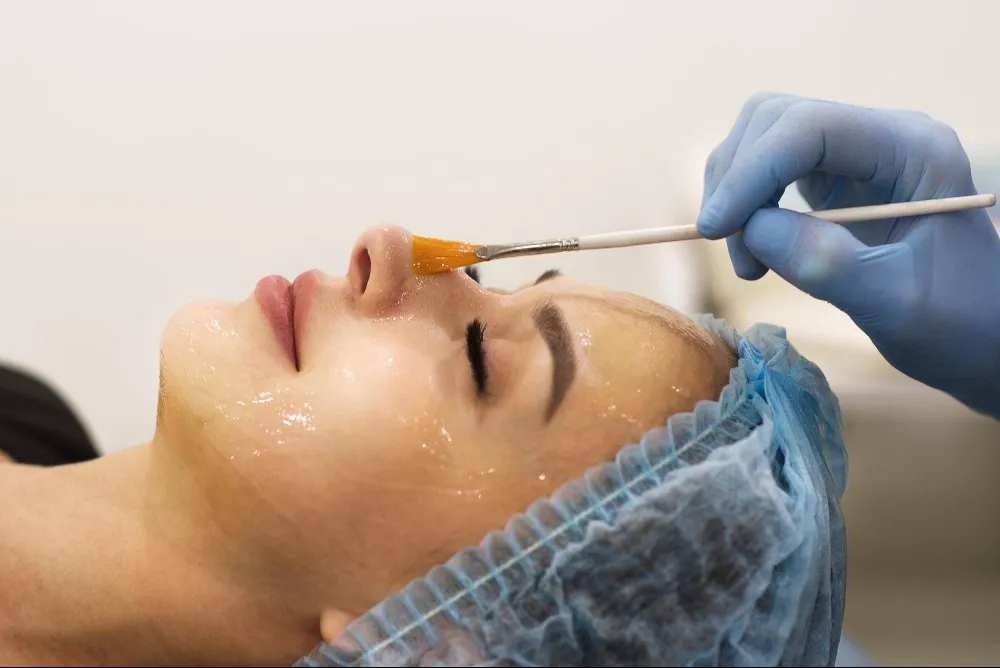
A chemical peel uses a selected peeling agent to produce controlled exfoliation of the skin. Different formulations and strengths are available, and their suitability depends on the concern being treated, skin type, medical history, and professional assessment.
Peels may be considered as part of a treatment plan for concerns such as:
- Uneven-looking skin tone
- Superficial pigmentation
- Rough texture
- Certain types of acne
- Post-acne marks
- Dull or sun-affected skin
The depth and type of peel matter. Stronger does not automatically mean better.
How is a facial different?
A conventional facial generally focuses on cleansing, exfoliation, hydration, extraction where appropriate, and temporary improvement in the way skin looks and feels.
It can be useful as routine skin maintenance, but it may not address specific pigmentation, acne, or textural concerns in the same way as a professionally selected chemical peel.
The decision therefore depends on your goal.
For occasional dryness or general maintenance, a facial may be enough. When there is a defined skin concern requiring controlled exfoliation, a clinician may assess whether a peel is appropriate.
What about Indian skin tones?
Skin tone and pigmentation tendency need careful consideration before procedures that deliberately exfoliate or irritate the skin.
People prone to post-inflammatory hyperpigmentation may develop darkening after excessive irritation. Using unsuitable products at home, combining multiple acids, or undergoing aggressive treatments without proper assessment can increase this risk.
This is particularly relevant for patients considering skin procedures in Pune and other parts of Maharashtra, where regular sun exposure can also influence aftercare.
What should you ask before choosing a peel?
Find out which type of peel is being recommended, why it suits your concern, how much downtime is expected, and what skincare should be avoided before and after the procedure.
At The Celebface Clinic, skin assessment before a peel can take into account pigmentation, acne activity, sensitivity, previous treatments, and current skincare products.
Rather than asking whether chemical peels are universally better than facials, ask which approach matches your skin problem. Treatment selected around the actual concern is far more useful than choosing solely on the basis of how intensive a procedure sounds.
Keywords